
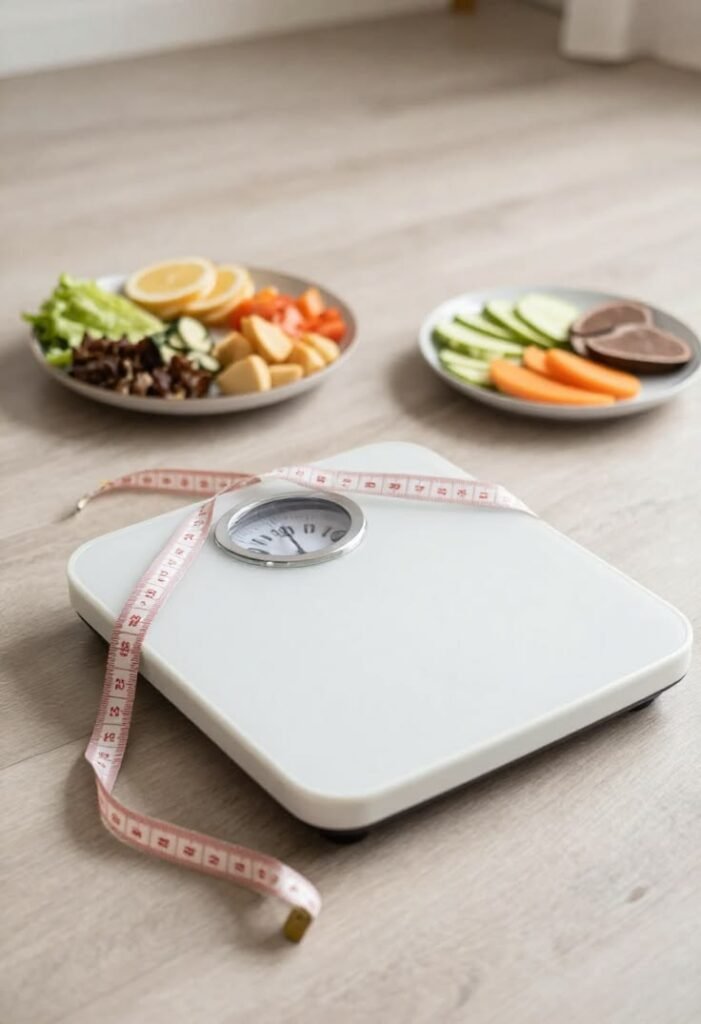
Weight Loss Tips for Diabetics — How to Lose Weight Safely
Losing just 5 to 7% of your body weight can dramatically improve your blood sugar, increase your insulin sensitivity, and in some cases, put Type 2 diabetes into remission. For someone weighing 200 pounds, that means losing just 10 to 14 pounds. The safest way to achieve this is through a moderate calorie deficit using the Diabetes Plate Method, combined with daily movement like a 15-minute walk after meals—never through extreme dieting or skipping meals.
If you have Type 2 diabetes, trying to lose weight can feel like running a marathon with a sprained ankle. You’ve likely been told to “just eat less and move more,” but for a diabetic, “eating less” can trigger a dangerous blood sugar crash, and certain medications can actually make your body hold onto fat.
The standard weight loss advice in American magazines doesn’t always apply to you. You need a strategy designed specifically for a metabolism that is actively resisting insulin. At Diabetes Daily Guide, we cut through the generic advice and focus on what actually works for diabetic weight loss—safely.
The Magic Number: Why 5 to 7% Changes Everything
When you have Type 2 diabetes, your liver and pancreas are often clogged with excess fat. This fat physically prevents your cells from using insulin properly.
You don’t need to drop to a runway model weight to fix this. Clinical trials, including the landmark DiRECT trial, show that losing just 5 to 7% of your total body weight is often enough to clear the fat from your liver and pancreas, allowing them to function normally again.
Here is what that looks like in real life:
| Current Weight | 5% Loss | 7% Loss |
|---|---|---|
| 160 lbs | 8 lbs | 11 lbs |
| 200 lbs | 10 lbs | 14 lbs |
| 250 lbs | 12.5 lbs | 17.5 lbs |
These are realistic, achievable goals. You don’t need to lose 50 or 100 pounds to see a massive improvement in your A1C. (To understand what foods to put on your plate to achieve this, read our [complete diabetes diet plan for type 2]).
Why Skipping Meals Backfires for Diabetics
This is the most dangerous mistake diabetic people make when trying to lose weight.
In a non-diabetic person, skipping breakfast might just make them hungry by noon. In a person with Type 2 diabetes, skipping breakfast signals the liver that the body is “starving.” To protect you, your liver immediately dumps stored glucose into your bloodstream to give you energy.
Result? You skip breakfast to lose weight, but your fasting blood sugar actually goes up. By lunchtime, you are ravenous, you overeat, and your blood sugar spikes even higher.
Never skip meals to lose weight. You must eat consistently—three balanced meals a day—so your blood sugar stays flat and your liver stays calm. Weight loss for diabetics comes from changing what you eat, not from starving yourself.
5 Safe, Proven Weight Loss Strategies for Diabetics
1. Master the Diabetes Plate Method (Without Counting Calories)
Counting every calorie is exhausting and often leads to obsessive eating habits. Instead, visually divide your plate at every lunch and dinner:
- 50% Non-starchy vegetables (spinach, broccoli, salad)
- 25% Lean protein (chicken, fish, eggs, tofu)
- 25% Complex carbs (brown rice, sweet potato)
This naturally creates a calorie deficit because you are replacing high-calorie, refined foods with low-calorie, high-fiber vegetables that physically fill you up. You feel full while eating fewer calories. No math required.
2. Walk for 15 Minutes After Every Main Meal
This is your secret weapon. A short walk after eating does two things simultaneously: it pulls glucose directly into your muscles to lower your blood sugar, and it burns a small number of calories. Over weeks and months, those 45 extra burned calories a day (15 minutes x 3 meals) add up to pounds lost without feeling like you are “working out.” (For the exact science on why this works, read our guide on [walking after meals and the 15-minute rule]).
3. Eliminate Liquid Calories Immediately
You can drink hundreds of calories in 60 seconds without ever feeling full. A single 20-ounce bottle of regular soda contains about 65 grams of sugar and 240 calories. A sweet tea has roughly the same.
Switch to water, black coffee, or unsweetened tea. If you currently drink two sodas a day and replace them with water, you will cut out nearly 500 calories a day. That alone can lead to a 1-pound loss per week—without changing a single thing you eat.
4. Prioritize Protein and Healthy Fats at Every Meal
Protein (chicken, fish, eggs, Greek yogurt) and healthy fats (avocado, olive oil, nuts) are the most satiating foods on the planet. They trigger hormones in your gut that tell your brain you are full.
If your lunch is a small green salad with fat-free dressing, you will be starving by 3:00 PM. If your lunch is a large green salad topped with 4 ounces of grilled chicken, half an avocado, and an olive oil dressing, you won’t even think about food until dinner. Same calorie difference, but one keeps you full and the other doesn’t.
5. Focus on Sleep, Not Just Food
This is the most overlooked weight loss tip in the diabetes community. When you don’t get enough sleep, your body produces more of a hormone called ghrelin (the “hunger hormone”) and less leptin (the “fullness hormone”). You wake up ravenous, specifically craving high-carb, sugary foods.
Furthermore, poor sleep increases cortisol (the stress hormone), which directly increases insulin resistance and makes your body store belly fat. Aim for 7 to 8 hours of quality sleep per night. It is just as important as diet and exercise.
What About Diabetes Medications and Weight?
The medication you take can significantly impact your ability to lose weight:
Medications that cause weight gain or make it harder to lose:
- Insulin
- Sulfonylureas (glipizide, glimepiride)
- Some atypical antipsychotics sometimes prescribed for mood
Medications that are weight-neutral:
- Metformin (the most common first-line drug) (Read our guide on [how metformin works] to see how it affects your weight)
Medications that cause weight loss:
- GLP-1 agonists (Ozempic, Trulicity, Mounjaro/Zepbound)
- SGLT2 inhibitors (Jardiance, Farxiga)
You should never stop taking a medication because of weight gain without talking to your doctor. If you are struggling to lose weight, tell your doctor. They may be able to adjust your prescription to a medication that supports your weight loss goals rather than working against them.
How Fast Should You Lose Weight?
The golden rule for safe, sustainable weight loss is 1 to 2 pounds per week.
Losing weight faster than this usually means you are losing water weight or muscle mass, not fat. Crash dieting also triggers your body’s starvation response, which slows down your metabolism and makes your insulin resistance worse in the long run.
Slow and steady wins the race. The person who loses 1 pound a week for 6 months (24 pounds total) is far more likely to keep it off—and far more likely to reverse their diabetes symptoms—than the person who loses 15 pounds in a month and gains back 20.
Frequently Asked Questions
Q: Why am I gaining weight even though I am taking metformin? A: Metformin itself doesn’t typically cause weight gain, but it doesn’t guarantee weight loss either. If you are gaining weight, look at your diet, sleep, and stress levels first. If those are in check and you are still gaining, talk to your doctor. It could be fluid retention, a thyroid issue, or another medication you are taking.
Q: Can I do keto or a very low-carb diet to lose weight faster? A: Very low-carb diets (like strict keto) can cause rapid initial weight loss and lower blood sugar quickly. However, they are extremely difficult to maintain long-term, and many people regain the weight when they add carbs back in. The Diabetes Plate Method is a more sustainable, less restrictive approach that still limits refined carbs without banning entire food groups.
Q: Will losing weight help me stop taking diabetes medication? A: It is possible. If you lose a significant amount of weight and your A1C drops below 6.5% without medication, your doctor may gradually take you off your pills. This is called diabetes remission. However, this depends on how long you’ve had diabetes and how much function your pancreas still has. (Read our guide on [can you stop taking diabetes medication] to understand the safe process).
Q: What if I exercise but don’t lose weight? A: Don’t get discouraged. Exercise builds muscle, and muscle weighs more than fat by volume. You might look leaner and your blood sugar might be dramatically better, even if the scale hasn’t moved. Use how your clothes fit and your daily blood sugar readings as progress markers, not just the scale.
Sources
- American Diabetes Association (ADA) — Weight Management and Diabetes
- Centers for Disease Control and Prevention (CDC) — Diabetes and Weight Loss
- DiRECT Trial — Weight Loss and Type 2 Diabetes Remission
- National Institute of Diabetes and Digestive and Kidney Diseases (NIDDK) — Weight Loss for Type 2 Diabetes
Medical Disclaimer: The information provided on Diabetes Daily Guide is for educational purposes only and is not a substitute for professional medical advice. Never begin a weight loss program or change your medication dosage without consulting your healthcare provider.