
You can lower your post-meal blood sugar without medication by activating your muscles through a 15-minute walk, eating fiber and protein before your carbohydrates, and drinking a glass of water before you sit down to eat. These methods don’t replace medication, but they can significantly blunt the post-meal spike, often by 20 to 40 mg/dL, making your blood sugar much easier to manage with diet alone or with a lower dose of medication.
If you are trying to manage your Type 2 diabetes through diet and lifestyle alone—whether by choice, because you are in the prediabetes stage, or because you are working with your doctor to reduce your medication—you have probably experienced that dreaded post-meal spike. You eat a healthy meal, check your blood sugar two hours later, and the number is 180 mg/dL. You feel like you did everything right, yet your blood sugar still went through the roof.
The frustration is real. But the solution isn’t to eat less food. The solution is to change how you eat, when you move, and what order you put food on your plate.
At Diabetes Daily Guide, we break down the science of post-meal spikes and give you 8 practical, drug-free strategies that actually work.
Why Does Blood Sugar Spike After Eating?
When you eat carbohydrates (bread, rice, pasta, fruit), your digestive system breaks them down into glucose, which enters your bloodstream. In a body with working insulin, this glucose is quickly pushed into your cells.
In a body with insulin resistance, the glucose enters your cells very slowly, so it lingers in your bloodstream, driving your numbers up.
The speed of this spike depends on three things:
- What you eat (simple carbs spike fast, complex carbs spike slowly)
- In what order you eat (fiber and fat first slows everything down)
- What you do after eating (sitting still lets the spike happen, walking absorbs the glucose)
You cannot control #1 without changing your diet. But you have complete control over #2 and #3 without touching a single pill. (To understand the full picture of what drives high blood sugar, read our guide on [what causes high blood sugar in diabetics]).
Strategy 1: Walk for 15 Minutes After Eating (The Most Powerful Tool)
This is the single most effective way to lower post-meal blood sugar without medication. It is so powerful that some endocrinologists call it “invisible insulin.”
When you walk, your leg muscles need energy immediately. To get it, they open special gates—called GLUT4 transporters—that pull glucose directly out of your bloodstream. The beautiful part? This happens without insulin. Your muscles bypass the broken insulin locks and absorb sugar on their own.
A single 15-minute walk after your largest meal can reduce your post-meal blood sugar by 20 to 40 mg/dL compared to sitting down.
How to do it right:
- Start within 30 minutes of finishing your meal
- Walk at a brisk pace—you should be breathing noticeably but able to talk
- You don’t need special clothes or a gym—walk around your house, your office hallway, or your block
- Set a 15-minute timer on your phone so you don’t have to guess when you’re done
(For the complete science behind why this works, read our guide on [walking after meals and the 15-minute rule]).
Strategy 2: Eat Fiber and Fat Before Carbohydrates (Food Sequencing)
You don’t have to change what you eat. Just change the order in which you eat it.
When you eat carbohydrates first, they enter an empty stomach and hit your bloodstream rapidly. But if you eat fiber (vegetables, salad, chia seeds) and healthy fats (avocado, olive oil, nuts) before your carbs, those fats and fibers form a physical barrier in your stomach that slows down the rate at which glucose enters your blood.
How to do it at every meal:
- Eat your vegetables or salad first
- Eat your protein (chicken, fish, eggs, tofu)
- Eat your carbohydrate (rice, bread, potato) last
This simple switch can reduce your post-meal spike by 15 to 25% without changing a single ingredient. (For complete meal structures that use this method, check our [7-day diabetic meal plan]).
Strategy 3: Drink Water Before You Sit Down to Eat
Drinking 16 ounces (2 cups) of water 15 to 20 minutes before a meal does two things:
1. It pre-hydrates you. Proper hydration dilutes your blood slightly, which means the glucose from your meal enters a more diluted bloodstream, resulting in a slightly lower peak.
2. It fills your stomach slightly. Water takes up physical space in your stomach, leaving less room for food, which naturally reduces how much you eat.
What NOT to drink: Do not drink sugary drinks, fruit juice, sweet tea, or soda before a meal. Liquid sugar hits your bloodstream faster than solid food because there is no fiber to slow it down. Stick to plain water, unsweetened tea, or black coffee.
Strategy 4: Use Apple Cider Vinegar as a “Spike Reducer”
While apple cider vinegar won’t lower your fasting blood sugar, it is one of the only natural remedies with evidence showing it can reduce the post-meal spike.
The acetic acid in vinegar slows down the rate at which food leaves your stomach. It essentially puts a speed bump between your stomach and your bloodstream. Instead of a flood of glucose hitting your blood all at once, it trickles in slowly over a longer period.
How to do it:
- Mix 1 to 2 tablespoons of raw, unfiltered apple cider vinegar in a small glass of water
- Drink it 10 minutes before you start eating
- Always follow it with a plain water chaser to protect your teeth from the acid
- Use a straw to minimize contact with your teeth
Do not drink it straight from the bottle—it will burn your throat and damage your tooth enamel.
(For our honest review of ACV and other natural remedies, read our guide on [7 natural ways to lower blood sugar]).
Strategy 5: Reduce the Carb Portion on Your Plate
This is the most obvious strategy, but it’s often the hardest to execute. Most of us fill our plate with rice, pasta, bread, or potatoes, with a tiny serving of vegetables on the side.
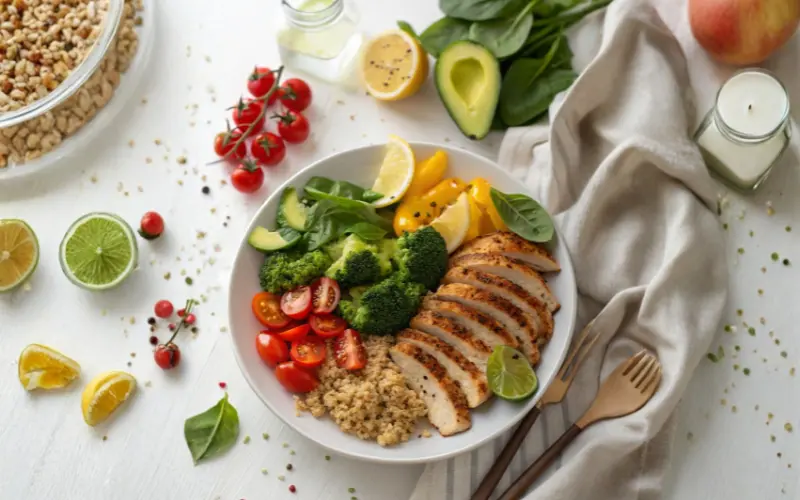
Flip that. Fill 50% of your plate with non-starchy vegetables, 25% with lean protein, and leave only 25% for complex carbs.
The math behind it:
- A standard American dinner might have 80-100 grams of carbohydrates
- A diabetic-friendly plate with the 50/25/25 split usually has 25-35 grams
- That single change cuts your glucose load by 50 to 65%
- Less glucose entering your blood means a smaller spike
(For visual examples of how to build these plates, read our [diabetes diet plan for type 2]).
Strategy 6: Add Soluble Fiber to Your Meal
Soluble fiber is the superpower of blood sugar control. It forms a thick, gel-like substance in your gut that physically traps carbohydrates and slows their digestion.
The best sources of soluble fiber for diabetics are:
- Chia seeds: Add 1-2 tablespoons to yogurt, oatmeal, or salads
- Oats: Rolled or steel-cut (not instant—instant oats spike blood sugar fast because the fiber is pre-broken)
- Black beans or lentils: Add half a cup to soups and salads
- Flaxseed: Grind 1 tablespoon and mix into smoothies, yogurt, or oatmeal
These ingredients are cheap, available at any grocery store, and blend invisibly into almost any meal. (For more food suggestions, check our guide on the [best foods for type 2 diabetes]).
Strategy 7: Do 2 Minutes of Resistance Bands After Dinner
If you can’t go for a walk, do this instead.
Resistance bands create a similar muscle contraction effect to walking, activating the same GLUT4 glucose-absorbing gates in your upper body and core. It is not as powerful as walking (your leg muscles are the largest muscles in your body), but it is far better than sitting still.
How to do it:
- Buy a set of resistance bands ($10-$15 on Amazon)
- After dinner, do 2 minutes of arm curls, chest presses, or back rows
- The resistance should feel moderate—you should feel your muscles working, but it shouldn’t hurt
(For a complete home exercise routine, read our guide on the [best exercises for type 2 diabetes]).
Strategy 8: Eat Slow-Digesting Carbs Instead of Fast-Digesting Ones
This is the easiest change you can possibly make, and it requires zero extra effort. Just swap fast-digesting carbs for slow-digesting ones.
Fast-digesting carbs (AVOID for post-meal control):
- White bread, white rice, regular pasta, bagels, white flour tortillas
- Fruit juice, soda, sugary drinks
- Instant oatmeal
- Crackers and white crackers
Slow-digesting carbs (USE for post-meal control):
- Brown rice instead of white rice
- Whole-wheat bread instead of white bread
- Whole-wheat pasta instead of regular pasta
- Sweet potato instead of white potato
- Rolled or steel-cut oats instead of instant
- Quinoa
Slow-digesting carbs take longer to break down, so the glucose trickles into your blood slowly instead of flooding it all at once. (To understand why this matters, read our guide on [fasting vs after-meal blood sugar]).
What NOT to Do After a High Reading
When you see a high post-meal number on your glucometer, your instinct might be to panic and try extreme measures. Don’t do these:
Do not skip your next meal. Skipping meals causes your liver to release stored glucose, making your next reading even higher. (Read our [weight loss tips for diabetics] to see why crash dieting fails).
Do not drink more water to “flush out the sugar.” Extra water dilutes your blood slightly, but it won’t push glucose out of your body faster than your kidneys can process it. One large glass after the meal is enough. Chugging a gallon of water will just make you run to the bathroom, it won’t lower your blood sugar dramatically.
Do not do an intense workout to “burn off the sugar.” If your blood sugar is above 250 mg/dL, intense exercise can actually trigger your liver to release more glucose as an emergency response. Stick to a moderate-paced walk.
Do not take extra medication. If you take extra metformin or extra insulin without your doctor’s permission to chase a high reading, you risk dropping too low, which is more dangerous than being slightly high. (To understand why, read our guide on [what is hypoglycemia]).
Frequently Asked Questions
Q: How long does it take for blood sugar to come down after eating? A: For a non-diabetic, blood sugar returns to baseline in 1 to 2 hours. For someone with Type 2 diabetes, it typically takes 2 to 4 hours. If you use the strategies in this article (especially walking and food sequencing), it will come down faster and lower than if you just sit still.
Q: Can I eat rice or bread and still keep post-meal blood sugar under control? A: Yes, but you have to be very careful with portion size. About 1/3 to 1/2 cup of cooked brown rice or 1 slice of whole-wheat bread per meal is manageable for most diabetics. A full plate of white rice (1.5 to 2 cups) will almost certainly spike your blood sugar above target.
Q: Does eating fat with carbs really slow down sugar absorption? A: Yes, this is one of the most powerful non-medical strategies available. Eating fat (like a handful of almonds or a slice of avocado) before your carbs creates a physical barrier in your stomach that slows down the enzymes that break down carbohydrates. The glucose enters your blood more slowly, resulting in a much lower spike.
Q: Does drinking water during a meal lower blood sugar? A: Drinking water during a meal can slightly dilute the glucose entering your bloodstream, which can reduce the peak of the post-meal spike by a few points. It is not a magic bullet, but it’s a helpful addition to the other strategies in this article.
Q: Can I eat dessert and keep my blood sugar stable? A. You can, but you have to be strategic. Eat your main meal first (protein, vegetables, complex carbs), wait 30 minutes, then have a very small portion of dessert. Eating dessert immediately after a large carb-heavy meal is a recipe for a massive spike. Eating it 30 minutes after your meal, after the main glucose has started to digest, creates a much smaller, safer second spike.
Q: What if I do all of this and my blood sugar is still high? A: If you are consistently doing everything right (low carbs, walking after meals, food sequencing, fiber) and your post-meal blood sugar is still consistently above your target, it means your insulin resistance is significant enough that diet and exercise alone are not enough. This is not a failure. It simply means you need medication. Talk to your doctor. Needing medication does not mean you failed. (Learn about your options in our guide on [how metformin works] and [when you need insulin for type 2 diabetes]).
Sources
- Diabetes Care Journal — Effect of Physical Activity on Postprandial Glucose Metabolism
- The Lancet — Effect of Food Sequencing on Glucose and Insulin Response
- American Diabetes Association (ADA) — Carbohydrate Counting and Meal Planning
- Diabetes Care — Postprandial Glycemic Response to Soluble Fiber
- Journal of the Academy of Nutrition and Dietetics — Glycemic Index and Diabetes Management
- European Journal of Clinical Nutrition — Vinegar Ingestion and Postprandial Glucose
Medical Disclaimer: The information provided on Diabetes Daily Guide is for educational purposes only and is not a substitute for professional medical advice. These strategies can help reduce post-meal blood sugar, but they do not replace prescribed medication. If your post-meal blood sugar is consistently high despite your best efforts, contact your healthcare provider for a medication adjustment.